Thursday, 7 January 2016

How to upgrade Android marshmallow LG G3 Mobile


How to upgrade Android Mrshmallow LG G3 Mobile Flash File


Well, don’t start the update procedure without making a backup of all your data. This process will wipe all the data from your LG G3, except for the internal storage, so you have no excuse for not performing a nandroid backup.
Even more, in order to success with the Nexus 6 ported Android 6.0 M installation process, you need a Custom Recovery like TWRP or CWM installed on your LG G3, not to mention that you should have device drivers installed on your PC. Only by installing these USB drivers, you will be able to connect the device with the computer successfully.

How to Flash Android 6.0 Marshmallow on LG G3 Tutorial: 


  1. For the start, you need to take the LG G3 Android Marshmallow ROM Model D850, D855, D858Hk from here;

  1. Also get the Google apps;
  2. Now transfer the files into your device’s internal storage of Mobile Phone or SD card
  3. Now reboot into Custom Recovery; to do that, you have to press and hold volume down and power keys at the same time;
  4.  select Advanced Wipe;
  5. Now swipe right to confirm;
  6. From there you have to tap on the Install option;
  7. Navigate to the ROM file it's time to select it;
  8. Swipe the confirmation button to proceed with installation. The ROM will be installed;
  9. You have to tap on the Install option  again;
  10. Go to the Google apps zip file and select it as well;
  11.  Reboot to system.                                                                                                 if any problem Then contact me in Comment Box i will try to help You

Saturday, 3 January 2015

NEW REVOLUATION FOR SMARTPHONE HOLOGRAPHIC INTERACTION DISPLAY:

  HOLOGRAPHIC INTERACTION DISPLAY:  NEW REVOLUATION FOR SMARTPHONE

Holographic Display:


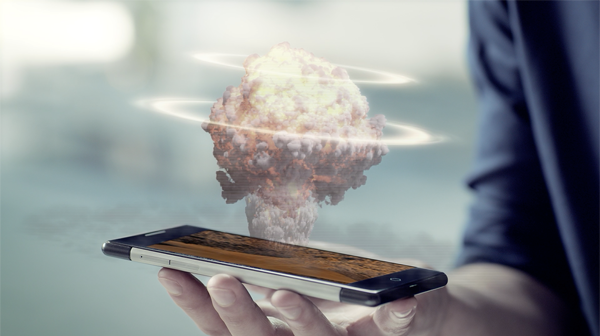
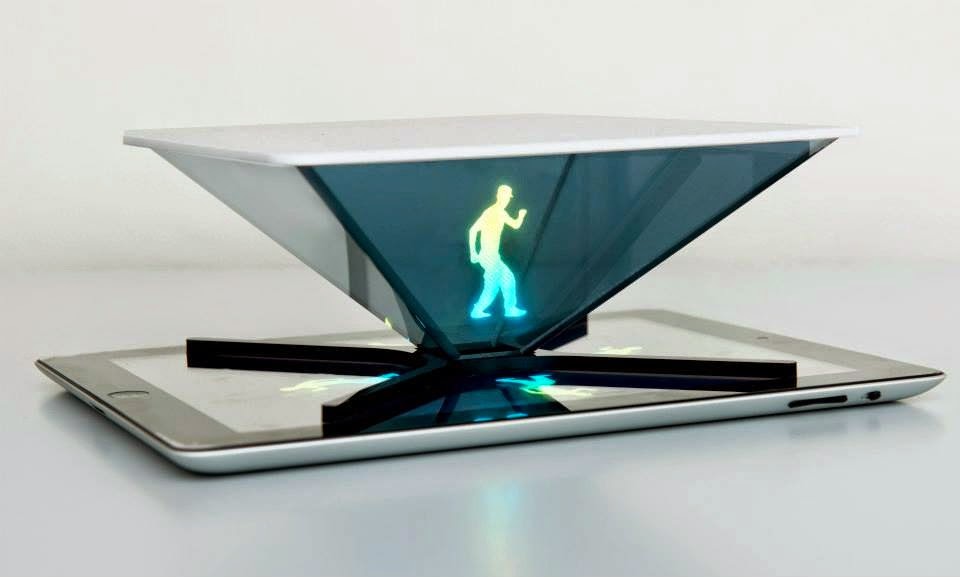
Smart Holographic phone

All things considered, before going in more short, I would first give you a speedy glimmer of the subject. 

At present, you can see a wide assortment of Smartphones giving TOUCH SCREEN highlights, in two classes: 

As specified over, this innovation is completely based upon the position of Human Eye; it is as of now not able to give a sequential perspective from various bearings in the meantime. That is, the figment field created is restricted to the eyes of a solitary individual and gives the best encountering just to a SINGLE PERSON. In this way, we'll call it as SMART HOLOGRAPHIC or PERSONAL HOLOGRAPHIC DISPLAY.Let's get more mindful and included. The Holographic showcase can be ordered in further three sorts: 

Physical Holography (holographic film, laser holographic printing). 

Computerized Holography (anticipated laser holographic imaging). 

Processing Holography (eyeball following holographic imaging, situation following holographic imaging). Holographic Display technology

Highlights


  • ·        Make gliding content lines!
  •  
  • ·        Quick and simple to utilize.
  •  
  • ·        Basic API for engineers.
  •  
  • ·        Change pictures into multi dimensional images with a solitary summon.
  •  
  • ·        You can make your own activitys!
  •  
  • ·        Incorporates the vivified rainbow shading &u!
  •  
  • ·        Bolsters any UTF-8 image.
  •  
  • ·        Can shows the measure of players online in a BungeeCord server (bolsters RedisBungee)

  • Where can Smart Holographic Phone be used?


Implementation of HOLOGRAPHIC Display Technology  

holographic display is a type of display that utilizes light diffraction to create a virtual three-dimensional image of an object. Holographic displays are unique from other forms of 3D imaging in that they do not require the aid of any special glasses or external equipment for a viewer to see the image.

Types of Holographic Display]

Laser Plasma

Laser plasma displays, developed in 2005 by the University of Texas, utilize a series of powerful lasers that focus light in desired positions in order to create plasma excitations with the oxygen and nitrogen molecules in the air. This type of holographic display is capable of producing images in thin air, without the need of any sort of screen or external refraction media. The laser plasma display is able to depict very bright and visible objects, but it lacks in terms of resolution and picture quality.

Micromagnetic Piston Display

The piston display, invented by Belgian company IMEC in 2011, utilizes a MEMS (micro-electro-mechanical system) based structure. In this type of display, thousands of microscopic pistons are able to be manipulated up and down to act as pixels, which in turn reflect light with a desired wavelength to represent an image. This developing technology is currently in the prototype phase, as IMEC is still developing the mechanism that will mobilize their "pixels" more effectively. Some of the limitations of this type of this display include the high cost, difficulty of creating large screens, and its susceptibility to mechanical failures due to the relatively large amount of moving parts (microscopic pistons).

Holographic Television Display

The holographic television display was created by MIT researcher Michael Bove in 2013. Dr. Bove used a Microsoft Kinect camera as a relatively effective way to capture subjects in a three-dimensional space. The image is then processed by a PC graphics card and replicated with a series of laser diodes. The produced image is fully 3-dimensional and can be viewed from all 360 degrees to gain spatial perspective. Bove claims that this technology will be widespread by 2023, and that the technology will cost as much as today's ordinary consumer TV's.

Touchable Holograms

Touchable holograms were originally a Japanese invention that became further developed by American microprocessor company Intel. Touchable hologram technology is the closest modern representation of the holographic displays that one might see in sci-fi movies such as Star Wars and particularly in the Star Trek television franchise. This display is unique in that it can detect a user's touch by sensing movements in the air. The device then provides hap tic feedback to the user by sending an ultrasonic air blast in return. In Intel's demonstration of this technology, the display was showcased representing a touch less, responsive piano. A possible implementation for this technology would be interactive displays in public kiosks; because this type of display does not require a user to physically touch a screen, it ensures that bacteria and viruses do not get transmitted from person to person 


Tuesday, 30 December 2014

How to Protect Your Eyes when use Computer Screen check software

How to Protect Your Eyes from Computer Screen check software


1. Get an extensive eye exam. 

Having a normal complete eye exam is the most essential thing you can do to avert or treat PC vision issues. 

As indicated by the National Institute of Occupational Safety and Health (NIOSH), PC clients ought to have an eye exam before they begin chipping away at a PC and once per year from that point. 

Amid your exam, make certain to tell your eye specialist how frequently you utilize a PC at work and at home. Measure how far your eyes are from your screen when you sit at your PC, and convey this estimation to your exam so your eye specialist can test your eyes at that particular working separation.

2. Use legitimate lighting. 

Eye strain regularly is brought about by too much splendid light either from open air daylight coming in through a window or from cruel inside lighting. When you utilize a PC, your surrounding lighting ought to be about half as brilliant as that commonly found in many workplaces. 

Kill outside light by shutting window hangings, shades or blinds. Lessen inside lighting by utilizing less lights or fluorescent tubes, or utilize lower power globules and tubes. In the event that conceivable, position your PC screen or screen so windows are to the side, rather than in front or behind it. 

Numerous PC clients discover their eyes feel better in the event that they can abstain from working under overhead bright lights. On the off chance that conceivable, turn off the overhead glaring lights in your office and use floor lights that give aberrant radiant or halogen lighting.

3. Minimize glare. 

Glare on dividers and completed surfaces, and also reflections on your PC screen likewise can bring about PC eye strain. Think about introducing as an against glare screen on your screen and, if conceivable, paint splendid white dividers a darker shading with a matte completion.

Once more, cover the windows. At the point when outside light can't be diminished, think about utilizing as a PC hood.

In the event that you wear glasses, buy focal points with hostile to intelligent (AR) covering. AR covering diminishes glare by minimizing the measure of light reflecting off the front and back surfaces of your eyeglass focal points.

4. Overhaul your presentation. 

In the event that you have not officially done as such, supplant your old tube-style screen (called a cathode beam tube or CRT) with a level board fluid precious stone presentation (LCD), like those on smart phones.

LCD screens are less demanding on the eyes and for the most part have a hostile to intelligent surface. Antiquated CRT screens can bring about a perceptible "glint" of pictures, which is a noteworthy reason for PC eye strain. Regardless of the possibility that this flash is impalpable, despite everything it can add to eye strain and weariness amid PC work.

Confusions because of gleam are significantly more probable if the invigorate rate of the screen is under 75 hertz (Hz). On the off chance that you should utilize a CRT at work, alter the showcase settings to the most elevated conceivable revive rate.

While picking another level board show, select a screen with the most elevated determination conceivable. Determination is identified with the "speck pitch" of the presentation. By and large, shows with a lower dab pitch have more keen pictures. Pick a presentation with a speck pitch of .28 mm or littler.

5. Alter your PC show settings.

Conforming the presentation settings of your PC can decrease eye strain and weariness. For the most part, these modification are gainful:

Splendor. Change the shine of the presentation so it's roughly the same as the brilliance of your encompassing workstation. As a test, take a gander at the white foundation of this Web page. In the event that it would appear that a light source, it's too splendid. On the off chance that it appears to be dull and dim, it might be excessively dim.

Content size and complexity. Change the content size and differentiation for solace, particularly when perusing or forming long archives. Normally, dark print on a white foundation is the best mix for solace.

Shading temperature. This is a specialized term used to portray the range of obvious light transmitted by a shading show. Blue light is short-wavelength unmistakable light that is connected with more eye strain than longer wavelength tones, for example, orange and red. Decreasing the shading temperature of your presentation brings down the measure of blue light transmitted by a shading show for better long haul seeing solace.

For PCs running on a Microsoft Windows working framework, show settings can be balanced in Control Panel. For an Apple PC, show settings are found in Systems Preferences (in the Applications organizer in Finder).

Now and again, the shading temperature of a desktop PC screen is balanced on the presentation itself.